
Generator Maintenance for Houston's Climate: Heat, Humidity, Floods and Freezes
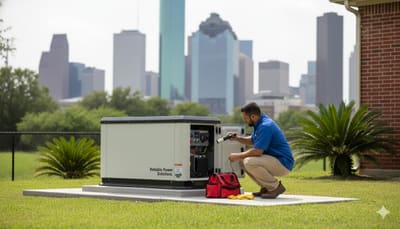
Generator maintenance in Houston’s climate has to account for conditions most owner’s manuals treat as extremes: long stretches of heat, near-constant humidity, salty and industrial air, heavy rain that floods streets and yards, and the occasional hard freeze. This guide explains how each one wears on a generator, then lays out a season-by-season maintenance calendar for Houston-area homes and businesses.
In this guide
Heat: batteries, cooling and oil
Houston summers do more than make technicians sweat. A generator enclosure sitting in direct afternoon sun can get far hotter inside than the air temperature, and that heat takes a steady toll.
Battery heat stress. The starting battery is the component Houston’s heat punishes most. Heat speeds up the chemical reactions inside a lead-acid battery, which accelerates internal corrosion and water loss. A battery can look fine and show acceptable voltage, then fail to crank the engine the first time it is really needed. The fix is a load test at every service visit and planned replacement rather than waiting for a no-start. Keep the battery charger working, too; a charger that has failed quietly drains the battery over weeks.
Cooling system load. During a summer outage, the generator often carries its heaviest load, because air conditioning is running, at the hottest time of year. Radiators on liquid-cooled units and cooling fins and fans on air-cooled units need to be clean and unobstructed. Check coolant level and condition on liquid-cooled models before summer.
Oil. Heat breaks down oil faster, and a generator that runs for days during an extended outage can reach its service interval quickly. Use the oil grade the manufacturer specifies for hot conditions, check the level daily during long outages, and keep spare oil on hand.
Humidity and corrosion
Humidity is a constant around Houston, and moisture finds its way into places it shouldn’t. Common humidity-related problems include:
- Corroded battery terminals and cable ends
- Green or white buildup on wiring connectors and control board terminals
- Rust on enclosure hinges, latches and fasteners
- Condensation inside fuel tanks, leading to water in diesel and gasoline
- Moisture in alternator windings on units that rarely run
Regular exercise runs help, because a running engine and alternator warm up and drive moisture out. Clean and protect terminals, keep enclosure seals and drain paths in good condition, and for diesel or portable units, keep fuel tanks full to limit condensation. Treat stored gasoline with stabilizer and rotate it.
Salt air and industrial exposure
Generators in the eastern and southern parts of the metro face extra corrosion pressure. Around Pasadena and the Houston Ship Channel corridor, airborne salt and industrial pollutants settle on metal surfaces and accelerate corrosion of terminals, radiator fins and enclosure hardware. Properties closer to Galveston Bay see similar effects.
If your generator lives in one of these areas, plan on more frequent cleaning of the enclosure and cooling surfaces, closer inspection of electrical connections, and touch-up of any scratched or chipped enclosure paint before rust spreads.
Flooding and elevation
Heavy rainfall can flood yards and streets across the Houston area quickly, and a generator sitting in water is a serious problem. Floodwater can enter the engine air intake, the fuel system and the alternator, and a flooded unit can be a shock hazard when started.
For new installations, placement matters. Locating a standby generator on an elevated pad or platform, ideally above the expected flood level for the property, protects it from routine street flooding. Local building requirements and flood maps for your address help determine the right height. Keep the transfer switch and related wiring in mind as well.
For existing units, keep drainage around the pad clear, check that the enclosure drains properly, and never start a generator that has been partly submerged. Have it inspected first.
Freezes: the rare but costly risk
Houston doesn’t freeze often, which is exactly why freezes catch generators unprepared. Winter Storm Uri in February 2021 brought prolonged freezing temperatures and widespread outages, and generators failed for predictable reasons:
- Weak batteries lose cranking power in the cold, so a battery that barely worked in summer may not start the engine at all.
- Propane tanks produce less vapor pressure in extreme cold, especially when the tank is low.
- Diesel engines without working block heaters are harder to start, and diesel fuel can gel in severe cold if it isn’t treated or blended for winter.
- Ice and snow can block air intakes and exhaust on some units.
A fall service visit that load tests the battery, confirms the block heater (if equipped) has power, checks propane levels and inspects the enclosure takes care of most cold-weather risk.
Pests, pollen and vegetation
Warm, sheltered generator enclosures attract fire ants, rodents, wasps and lizards. Ants can pack electrical contacts and controller compartments; rodents chew wiring. In heavily wooded areas like The Woodlands, pine needles, leaves and pollen collect on cooling fins and in air intakes, while fast-growing landscaping around any home can choke airflow.
Keep a clear zone around the unit per the manufacturer’s clearance requirements, trim plants regularly, and look inside the enclosure during routine checks for nests or debris.
Portable generators need climate care too
Portable units spend most of their lives in garages and sheds, which in Houston means months of heat and humidity between uses. That storage period is when most portable generator problems start.
- Gasoline goes stale. Treat fuel with stabilizer and run the carburetor dry or drain it before storage, or follow the manufacturer’s storage procedure.
- Moisture collects. Store the unit off the floor in a dry spot, and cover it loosely so air can still circulate.
- Batteries drain. Electric-start models need their battery kept on a maintainer or charged every few months.
- Exercise it. Start it and run it with a modest load every month or two so seals stay lubricated and problems show up before a storm.
When a storm is coming, roll it out early, confirm it starts, and set it up well away from doors, windows and vents to keep carbon monoxide out of the house.
A seasonal generator maintenance calendar for Houston
Rather than following a generic calendar, line up your maintenance with Houston’s seasons:
| Season | Focus | Key tasks |
|---|---|---|
| Spring (March–May) | Get ready for storm season and heat | Annual professional service; battery load test; oil and filters; coolant check; transfer switch test; clear vegetation |
| Early summer (June–July) | Hurricane season begins June 1 | Confirm fuel supply; full load test; check enclosure drains; review outage plan |
| Late summer (August–September) | Peak heat and peak storm activity | Clean cooling surfaces; check battery charger; inspect after any storm or flooding |
| Fall (October–November) | Hurricane season ends November 30; prepare for cold | Post-season inspection; battery test; block heater check; propane level; pest check |
| Winter (December–February) | Freeze readiness | Monitor forecasts; keep battery charger powered; check fuel; confirm exercise runs complete |
Throughout the year, watch the weekly exercise run, glance at the controller for alerts, and walk around the unit after every major storm. For a more detailed storm-specific list, see our hurricane season generator checklist, and for routine owner-level tasks, our guide on how to maintain a generator.
When to call a professional
Owners can handle visual checks, vegetation control and keeping an eye on the controller, but battery testing, fluid service, transfer switch checks and post-flood inspections should be done by a trained technician. JaWilly Services offers routine generator maintenance and repair for homes and businesses across Houston, Sugar Land, The Woodlands, Pasadena and nearby communities, plus generator diagnostics when something seems off and replacement parts when climate wear catches up with a component. Our certified technicians work on most major makes and models and provide upfront quotes.
To schedule seasonal maintenance, contact us or call or text 832-418-7218. Standard appointments are available Monday through Friday, 8:00 AM to 5:00 PM, with emergency support 24/7.