
Generator Repair Near Me in Houston: How to Pick the Right Repair Company
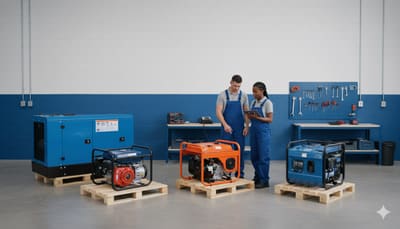
Typing generator repair near me Houston into a search bar returns a long list of names, and they are not all equal. The right company asks good questions on the phone, diagnoses before it replaces parts, gives you a clear price up front and can work on your specific make, size and fuel type. This guide walks through how to tell the difference so your next repair is done once and done right.
In this guide
Why “generator repair near me” matters in Houston
A generator problem rarely shows up on a calm, convenient Tuesday. It tends to surface during the outage itself, right after a tropical storm, a summer squall line or a hard freeze like Winter Storm Uri in February 2021. When Hurricane Beryl knocked out power across the region in July 2024, plenty of owners discovered their units would not start only after the lights went out.
That is why proximity matters. A company that already works across Houston, Katy, Sugar Land, The Woodlands, Pearland and Pasadena understands the local conditions that wear generators down: heat that shortens battery life, humidity that corrodes connections, and long idle stretches between outages that let fuel and seals deteriorate. A local team can also get to you faster than a crew dispatched from out of the region once a storm has passed.
When you search for “generator repair near me,” look past the map pin. Check that the company actually lists your city in its service area, offers support outside business hours and focuses on generators rather than treating them as a sideline.
The four main kinds of generator repair
Knowing the general category of your problem helps you describe it on the phone and judge whether the company you are talking to has the right experience. Most repairs fall into one of four groups.
Engine repairs
The engine is the part that turns fuel into motion. Typical problems include low oil pressure shutdowns, overheating, worn belts or hoses, coolant leaks on liquid-cooled units, and hard starting caused by spark plugs, valves or governors that are out of adjustment. Engine repairs require someone who understands small and mid-size combustion engines, not just electrical work.
Fuel system repairs
Gasoline breaks down over time, and stored diesel can pick up water and microbial growth. Natural gas and propane units have their own issues, such as regulators, solenoids and supply lines that are undersized or leaking. Symptoms include surging, stalling, rough running and failure to start. Never attempt to repair a gas line yourself.
Electrical and control repairs
This group covers the alternator, the automatic voltage regulator, control boards, sensors, wiring and the starting battery. Signs include no output despite the engine running, fluctuating voltage, flickering lights, fault codes on the controller and a unit that is completely dead. A weak battery is one of the most common reasons a standby generator fails to start, and it is also one of the easiest fixes.
Transfer switch repairs
The automatic transfer switch is what moves your home or building from utility power to generator power and back again. If the generator runs but the house stays dark, or the system will not return to utility power once service is restored, the switch, its controller or its wiring is a likely suspect. Transfer switch work involves your main electrical service, so it is strictly a job for a qualified technician.
Questions to ask before you book
A few minutes on the phone will tell you a lot. Use these questions to compare companies:
- Do you work on my generator's make, model and fuel type?
- Do you service residential units, commercial units or both?
- Is my address inside your regular service area?
- Do you offer emergency support outside normal business hours?
- How do you diagnose the problem before quoting a repair?
- Will I get a clear price before work begins?
- Do you use manufacturer-approved replacement parts?
- Will you explain what failed and how to prevent it next time?
Listen to how the answers are given as well as what they are. A good company will ask you questions back, about the symptoms, the age of the unit and its maintenance history, because that information shapes the diagnosis.
What a good repair visit looks like
A proper repair follows a predictable sequence. If a technician skips straight to swapping parts, you may pay for components you did not need.
- Listen and reviewThe technician asks what happened, checks the controller's fault history and looks at the maintenance record if one exists.
- Inspect and testBattery voltage, fluid levels, fuel supply, wiring, connections and the transfer switch are checked. Testing confirms the cause instead of guessing at it.
- Explain and quoteYou hear what is wrong in plain language, what the options are and what each costs before anything is replaced.
- Repair with the right partsFailed components are replaced with parts that meet the manufacturer's specification.
- Verify under real conditionsThe generator is started, run and, where possible, tested with a load or a simulated outage so you know the transfer switch does its job.
- Recommend next stepsYou leave with notes on any wear spotted during the visit and advice on maintenance that could prevent a repeat.
At JaWilly Services, every repair starts with finding out what the generator is actually doing. Our generator diagnostics service exists so the fix addresses the real cause, and our pricing is transparent with upfront quotes and no hidden fees.
Red flags to watch for
Not every bad experience can be spotted in advance, but these warning signs should make you pause:
- No diagnosis, just a parts list. Recommending a new controller or a new generator without testing is a guess, and you pay for the guess.
- Vague pricing. If you cannot get a clear explanation of what you will be charged for, expect surprises.
- Pressure to replace a unit immediately. Sometimes replacement is the honest answer, but it should come with reasons, not urgency.
- Unfamiliarity with your equipment. Hesitation about your make or fuel type suggests you may be paying for someone’s learning curve.
- Unsafe shortcuts. Bypassing safety shutdowns, back-feeding through a dryer outlet or skipping the transfer switch are never acceptable fixes.
- No follow-up advice. A repair with no explanation of why the part failed leaves you exposed to the same failure next season.
Safety first while you wait. Never run a generator in a garage, carport or near open windows, because carbon monoxide can build up quickly and is deadly. Do not open control panels or touch transfer switch wiring yourself. Shut the unit off and keep people and pets away until a technician arrives.
Residential vs. commercial repair needs
The fundamentals of a good repair are the same for a house in Pearland and a warehouse off the Pasadena industrial corridor, but the stakes and the paperwork are different.
| Factor | Typical home | Typical business |
|---|---|---|
| Equipment | Air-cooled or smaller liquid-cooled standby, or a portable unit | Larger liquid-cooled sets, often diesel or natural gas |
| Main concern | Comfort, food, medical devices, sump pumps | Revenue, inventory, data, life-safety systems |
| Scheduling | Weekday visits for non-urgent issues, emergency calls during outages | Repairs planned around operating hours, plus emergency response |
| Records | Helpful for warranty and resale | Often required for inspections and insurance |
Businesses should look for a provider that can also handle scheduled maintenance and documentation, which we cover in depth in our guide to choosing a commercial generator service provider. JaWilly Services supports both sides, with dedicated commercial generator services for facilities and businesses.
When to call a professional
Owners can safely handle the basics, such as checking oil, keeping the area around the unit clear and noting fault codes. Anything involving fuel lines, internal engine parts, control boards or the transfer switch belongs with a trained technician.
If your generator will not start, will not transfer, shuts down under load or is showing a warning you do not recognize, call or text JaWilly Services at 832-418-7218. Emergency support runs 24 hours a day, 7 days a week, and standard appointments are available Monday through Friday from 8:00 AM to 5:00 PM. You can also request service online or read more about our emergency generator support.